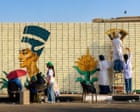
A 66-metre mural depicting ancient Egyptian pharaohs Tutankhamun and Nefertiti was painted over in Cairo ahead of Chinese President Xi Jinping's state visit last month, sparking debate over historical representation and artistic censorship.
The artwork, created by young volunteers from the group Rasmet Basma in Tahrir Square, was one of 40 murals commissioned to beautify the city for Xi's arrival. Cairo authorities removed the piece before the Chinese leader's visit, citing concerns that its depiction of the pharaohs with dark skin revived what officials characterized as Afrocentric claims about ancient Egyptian rulers' origins.
The Guardian reports that the mural's removal reflects tensions in Egypt over how the nation's ancient history is portrayed and interpreted. The painting prompted allegations that it promoted contested theories about the racial and ethnic identity of pharaonic Egypt, a topic that has generated scholarly and public disagreement for decades.
The incident highlights the intersection of heritage politics, diplomatic protocol and artistic expression in Cairo. While authorities justified the removal as necessary to prepare the city for a visiting head of state, the decision to suppress the specific artwork raises questions about censorship and whose interpretations of Egyptian history authorities deem acceptable for public display.
No statement from the artists or from Xi Jinping's delegation regarding the mural's removal has been reported. The fate of the remaining 39 murals commissioned for the state visit remains unclear.