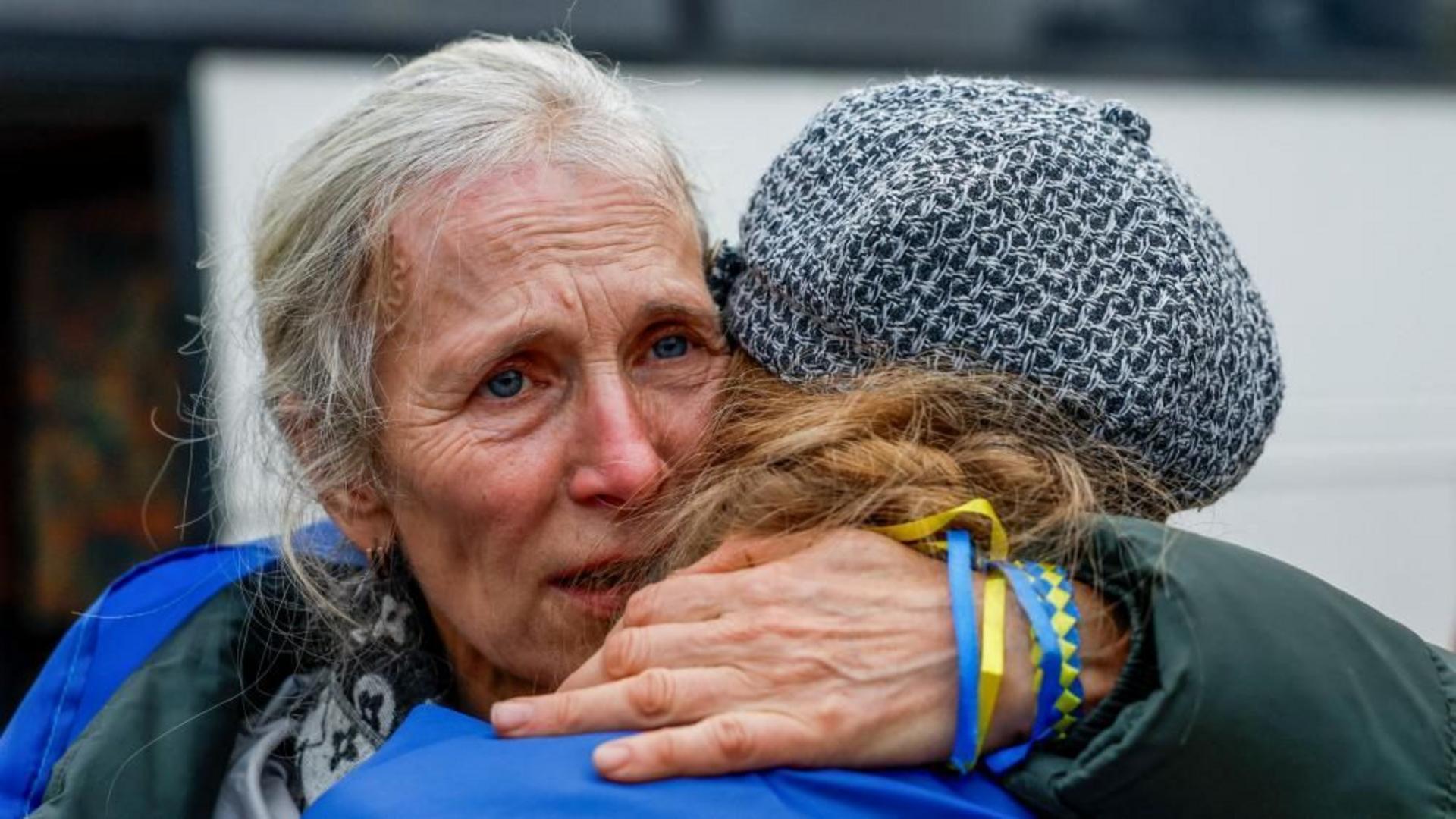
Dozens of evacuees from the Russian-occupied city of Oleshky reunited with relatives on Friday after a local ceasefire allowed them to leave, according to a BBC report. Families wept as they embraced people they had not seen in years. Some elderly residents were carried on stretchers.
The report says the evacuees had been trapped without food, water and electricity, and that many had resorted to cooking garden weeds to survive. Ukrainian President Volodymyr Zelensky thanked US First Lady Melania Trump for her efforts in brokering the ceasefire, the report states.
A convoy of 25 buses, with space for 750 people, left the city on Friday afternoon, along with ambulances. Evacuees travelled through Russian-occupied territory to southern Russia, flew to Belarus, and were then driven across Ukraine's northern border on Saturday. Dmytro Lubinets, Ukraine's human rights ombudsman, said the oldest evacuee was 94 and the youngest was one.
According to the report, the routes out had been mined and were subject to drone attack, and bridges across the River Dnipro have been destroyed. One resident told the BBC he walked through 24 kilometres of minefields to reach safety three weeks earlier. The ceasefire allowed the road to be cleared of mines and aid to be delivered. It remains in place until the end of Sunday, 1 November.
Several hundred residents chose to stay, the report says. Russia said it had prepared "dozens of tonnes" of aid for those staying, including food, medicine, hygiene products and generator fuel. Lubinets said those who remain "will receive all the necessary humanitarian assistance." He travelled to Oleshky with his Russian counterpart, Yana Lantratova, a step the report describes as the first visit by a Ukrainian official to Russian-occupied parts of Ukraine since the war began. Some in Ukraine have criticised his cooperation with a representative of the occupying power.