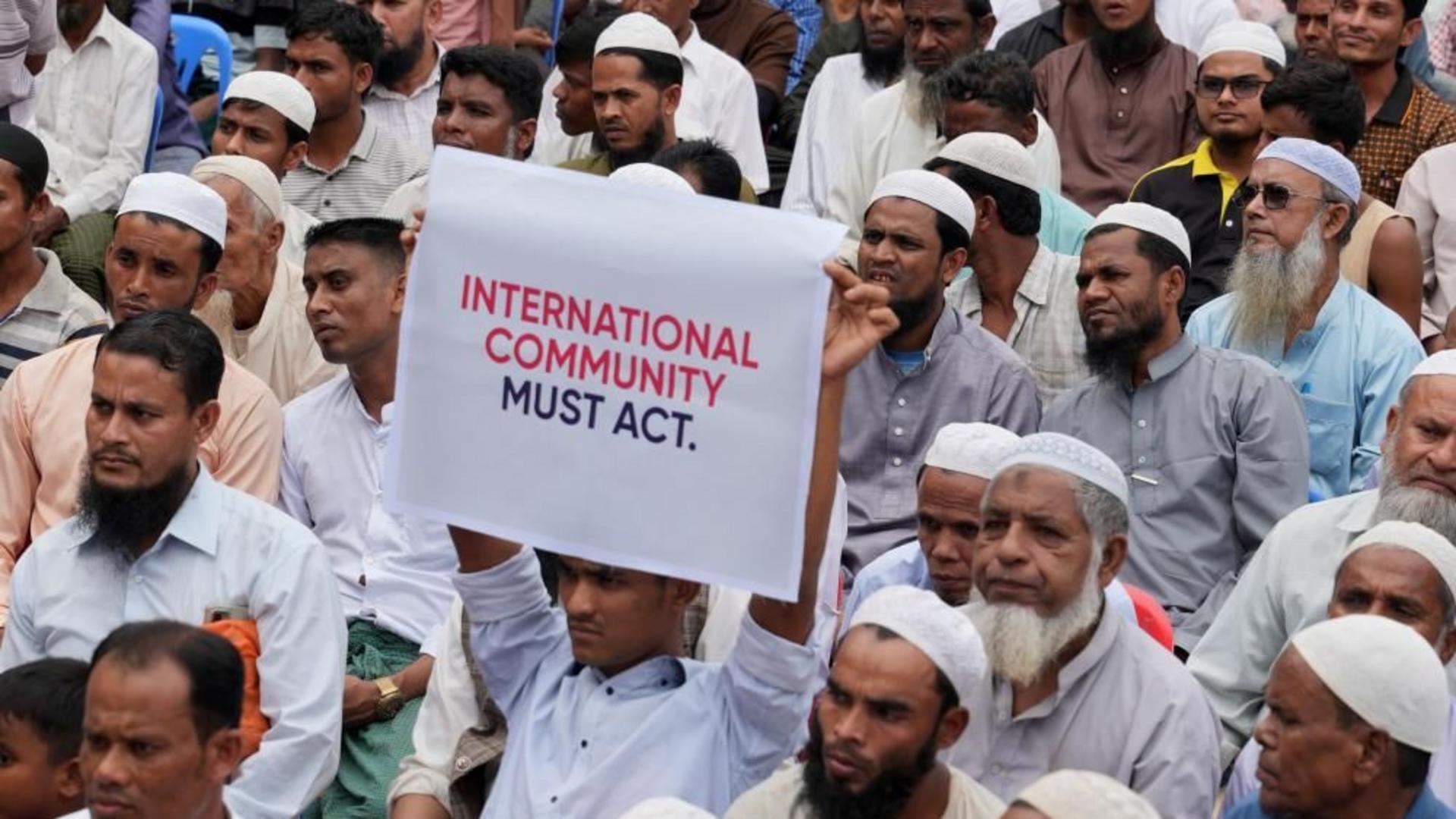
The International Court of Justice has found Myanmar guilty of committing genocide against its Rohingya minority. The verdict was reached by a majority of nine votes to six. It is the first time an international court has found a state responsible for genocide.
ICJ president Yuji Iwasawa said Myanmar had the "intention to destroy" a substantial part of the Rohingya population. He said the military engaged in "extensive destruction of evidence" to hide its crimes. The court found that "genocidal intent is the only reasonable inference that can be drawn from the evidence" it had seen.
The court said the military carried out indiscriminate killings, executions, widespread sexual violence and deliberate burning of Rohingya homes during a 2017 clearance operation in Rakhine State. The court determined that around 10,000 Rohingya were "violently killed." It found that approximately 815,000 had been targeted in some way. More than 700,000 fled to Bangladesh.
The ICJ also found that Myanmar violated several other parts of the 1948 Genocide Convention. It said policies such as limiting married couples to two children were discriminatory. Myanmar must pay reparations, though the exact amount will be set later.
Myanmar denied the claims. It said its forces responded to attacks by the Arakan Rohingya Salvation Army. Government representative Ko Ko Hlaing told the court in January that the country "was not obliged to remain idle." After the verdict, he said he had "no comment."
Rohingya communities and human rights groups welcomed the ruling. Mohammed Nowkim, a Rohingya who now lives in Canada, said it was "formal recognition of our suffering." UN human rights chief Volker Türk said the decision "must now translate into real action."
The ICJ is not a criminal court and cannot imprison officials. Enforcement depends on the UN Security Council and political pressure.