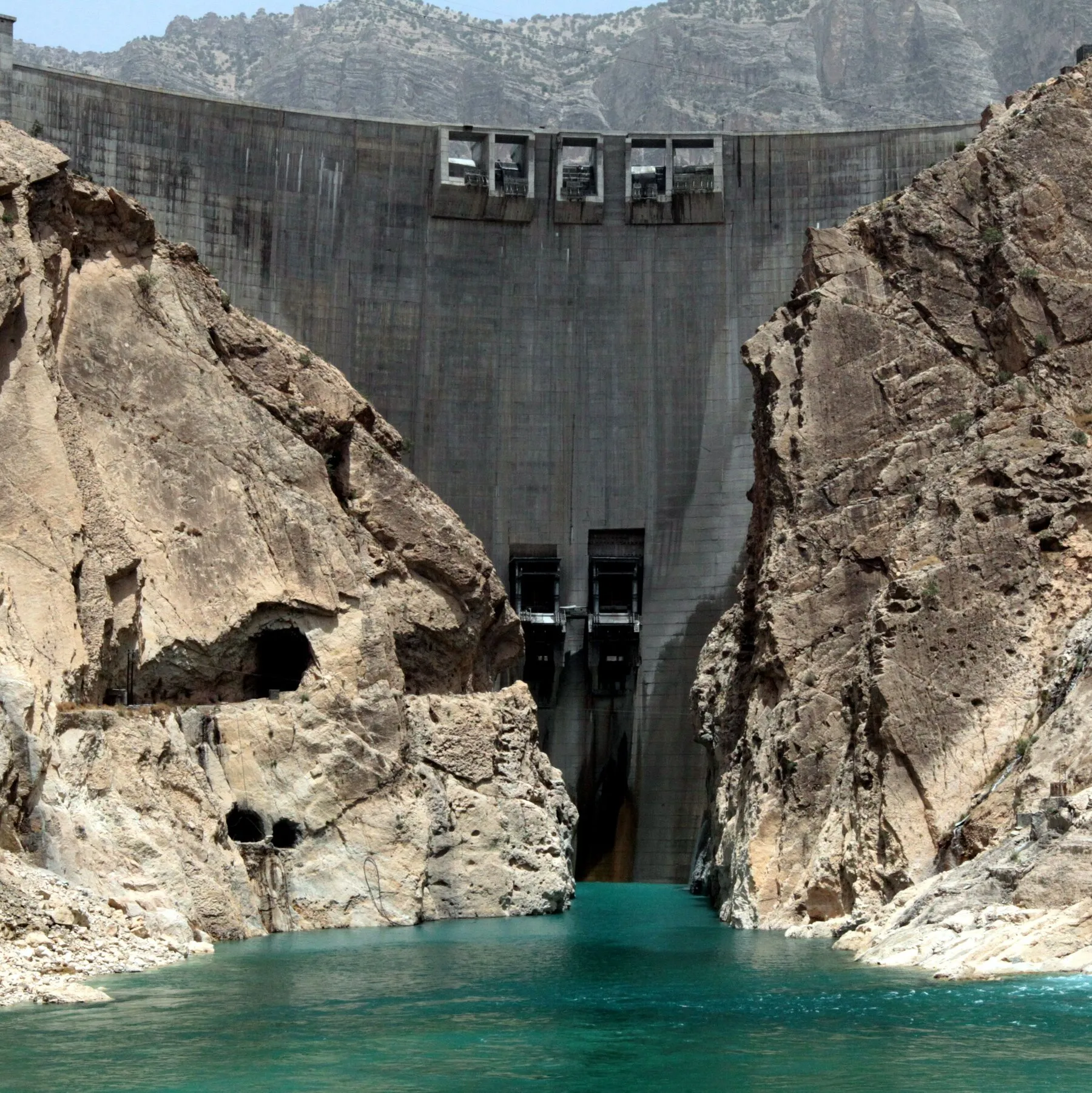
Environmentalists have long been puzzled by the large number of dams and water transfer projects across Iran, including pipelines and tunnels built in regions that did not seem to need them. The puzzle has now acquired a grim new dimension. After U.S. and Israeli airstrikes this year hit concealed Iranian missile sites, some analysts concluded that the water projects may have been developed to support the country's military buildup. That conclusion deserves to be taken seriously, but it should not be mistaken for proof.
The report's central evidence is a pattern on a map. Nima Shokri, an expert on water security, and his team at the Hamburg University of Technology had tracked at least 533 dams across Iran, among the most of any country in the region. When he later saw a map of airstrikes on suspected military sites, he found that its semicircle of dots from north to south nearly matched his own map of dams. Shokri's account is candid: his old question about why Iran was building so many dams has been replaced by a new one about why strikes seem to cluster near them. That is a reasonable question. It is not yet an answer.
The limits of the evidence matter. The report itself says that any connection between Iran's missile program and its decades-old water infrastructure initiative remains speculative, and that the secrecy surrounding the missile program makes verification difficult. Overlapping geography can arise from many causes, including shared terrain, population centers and strategic corridors. Experts may find the pattern suggestive, but suggestion is not a finding, and nothing in the report establishes intent behind the dams.
Still, the questions raised should be pursued openly. Governments and independent researchers should be able to examine how water projects were approved, what engineering needs they claimed to serve, and whether any were designed with dual use in mind. Such scrutiny would not require accepting the most dramatic reading. It would simply replace speculation with documentation. Environmentalists who have long asked why so many dams were built where water seemed scarce are right to keep asking.
The stakes extend beyond one country. Water infrastructure affects farmers, households and ecosystems, and any suggestion that it serves a military purpose could shape how such projects are funded and protected in conflict zones. Until the evidence is clearer, the honest position is to treat the dam-missile link as a serious hypothesis that demands transparent investigation, not as a settled explanation.