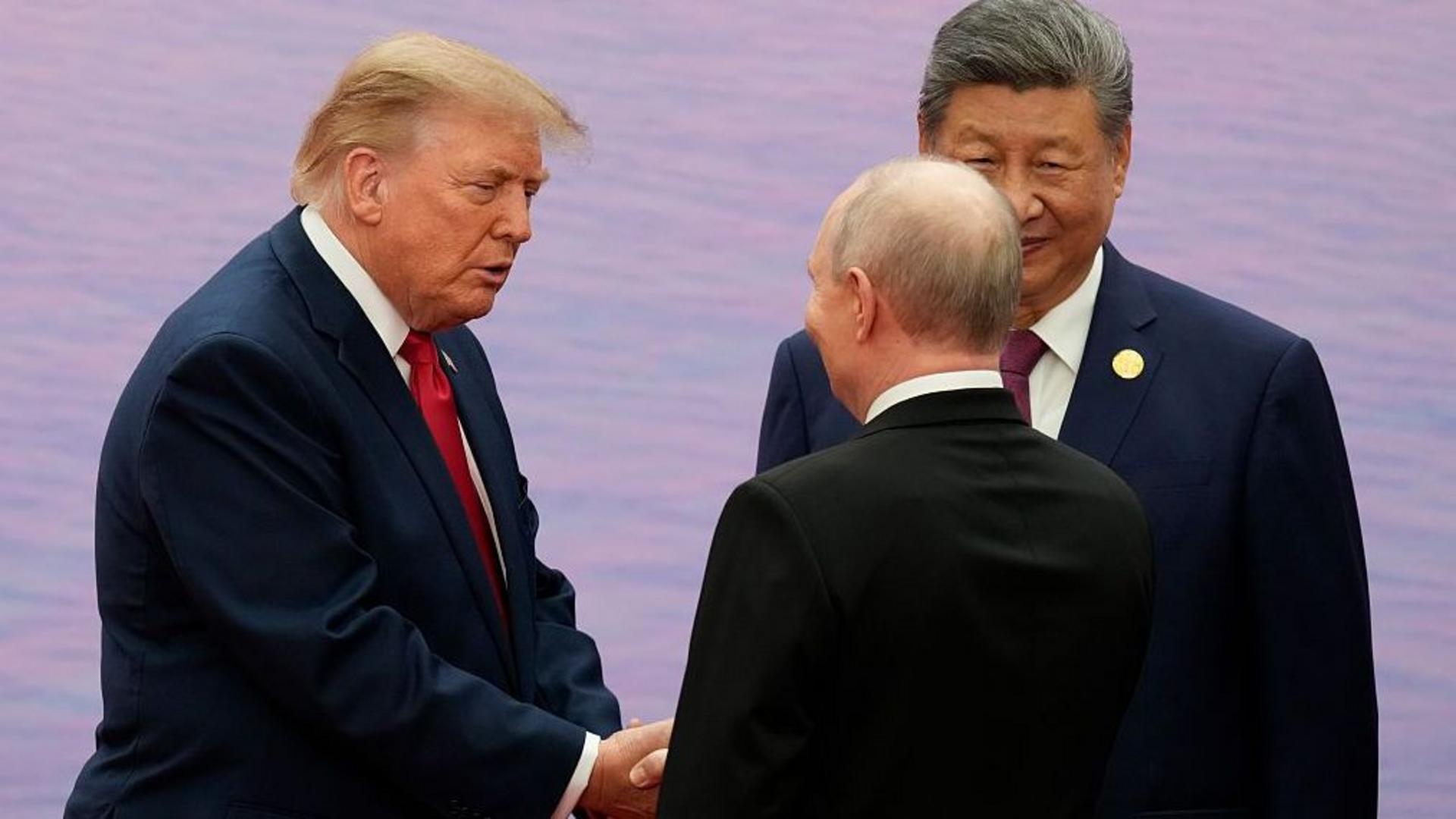
The report presents a striking image: Donald Trump, Vladimir Putin and Xi Jinping meeting for a historic trilateral summit in Shenzhen, with driverless cars, drones and dancing robots as the backdrop. Whatever the spectacle, the diplomatic achievement belongs to Beijing. For decades, Washington and its western allies shaped the world order. Now China has assembled three of the world's most powerful leaders at one table, and that alone signals how much Xi's government has moved from reacting to Western decisions to helping set the agenda.
But the report also shows why the moment is less comfortable than it looks. Xi would prefer to avoid the war in Ukraine, which is now in its fourth year and has claimed hundreds of thousands of lives. Beijing still describes itself as neutral, yet the report notes accusations from the US and Europe that China has supplied components usable in the war and propped up Russia's economy by buying its oil and gas. Xi wants to stay close to Putin without absorbing Russia's problems, and Europe remains a crucial market for an economy that depends heavily on exports.
Nuclear arms control is the second pressure point. Trump wants China included in limits on nuclear weapons after the New START treaty expired in February this year. Beijing has pushed back, arguing that its smaller arsenal should not be bound by limits designed for Washington and Moscow. That position is defensible on its face, but it sits awkwardly with China's ambition to be seen as a responsible power. If Xi wants recognition as a leader on the world stage, refusing any role in arms control will be hard to reconcile with that claim.
The risk for Xi is that two unpredictable leaders dominate the room. Trump has already threatened to go off script, and Putin has his own agenda. Xi may hope that any unscripted moment will highlight his image as a steady statesman beside two men entangled in wars they cannot end. Still, the report suggests the summit is unlikely to produce significant outcomes. Its real value may be domestic. With youth unemployment, a property crisis and a slowing economy, Xi will want to show that China's century of humiliation is over. That message should be read for what it is: a stage for propaganda, not a substitute for the economic and social reforms the country needs.